

Flatfoot Reconstruction
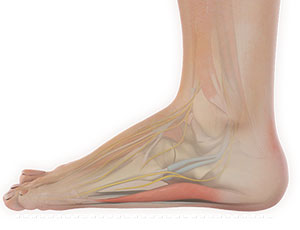
What flatfoot reconstruction treats
Adult acquired flatfoot deformity — also called progressive collapsing foot deformity — develops when the structures that hold up the arch of your foot gradually give way. The posterior tibial tendon, which runs along the inside of the ankle and supports the arch, is usually the first to fail. As it stretches and loses function, the arch flattens and the heel tilts outward. Over time the ligaments along the inside of the foot stretch as well, and the bones shift out of alignment.
Most people notice pain along the inside of the ankle first. As the heel drifts outward, pain often moves to the outside of the foot, where bone begins to contact bone. Many also notice that the shape of the foot has changed, that shoes wear unevenly, or that walking any distance has become tiring.
When surgery is considered
Bracing, custom orthotics, and physical therapy come first, and for many patients they are enough. Surgery is considered when the deformity is painful, has not settled with those measures, and is limiting what you are able to do. The goals are to rebuild the arch, bring the heel back underneath the leg, and protect the joints from the arthritis that follows a long-standing deformity.
What the operation involves
Flatfoot reconstruction is not a single operation. It is a combination of procedures chosen for the specific way your foot has collapsed, and it is open surgery — the corrections involve cutting and repositioning bone, which is why the recovery is deliberate. Depending on your deformity, the reconstruction may include:
Medializing calcaneal osteotomy. The heel bone is cut and shifted inward to correct the outward tilt of the hindfoot, so that the pull of the Achilles supports the arch instead of flattening it. It is held with one or two screws.
Flexor digitorum longus tendon transfer. The FDL tendon is rerouted to take over the work of the damaged posterior tibial tendon and attached to the navicular bone as a new arch support. Each toe has a second tendon, so toe movement is preserved.
Spring ligament repair. The spring ligament runs between the heel bone and the navicular and is a critical arch stabilizer. If it has stretched or torn, it is repaired or reinforced.
Gastrocnemius recession. A tight calf places extra strain on the arch. A small lengthening of the gastrocnemius lets the ankle bend more freely, without meaningful loss of strength.
Cotton osteotomy. If the inner column of the foot sits too high, a wedge of bone graft is placed into the medial cuneiform to bring the first metatarsal down and restore the foot's tripod.
Lateral column lengthening. When the front of the foot points outward, the heel bone is lengthened on the outer side with a graft wedge to correct that abduction and add arch height.
Which of these your foot needs is decided from your examination and weightbearing imaging, and the combination used is documented in your operative report.
Recovery
Because the corrections rely on bone healing, you will keep all weight off the foot until Dr. Williams clears you — roughly the first six weeks, in a splint at first and then a walking boot. Physical therapy starts with gentle ankle and toe motion and swelling control, then moves to strengthening and balance work as weight bearing advances.
Full recovery is measured in months rather than weeks, and swelling can persist well past the point where you are walking comfortably. Every patient receives a written protocol covering each stage — mobility aids, wound care, medications, and when driving and flying are safe.