

Foot & Ankle Deformity Correction
What deformity means here
A deformity is a foot or ankle that no longer sits in the alignment it was built for. It might have developed slowly, as with a collapsing arch, a high-arched foot, or a bunion drifting the big toe sideways. It might date from an injury that healed crooked. Either way, the consequence is the same: load moves onto parts of the foot not designed to carry it, and over time that produces pain, callus, difficulty with shoes, and arthritis in the joints taking the extra strain.
Correcting a deformity is not cosmetic surgery. The purpose is to get the foot back underneath the leg so that load passes through it the way it should, and to protect the joints from the damage that misalignment causes.
What gets treated
Common problems include adult acquired flatfoot, in which the arch collapses and the heel drifts outward; cavovarus, a high-arched foot that rolls outward and sprains repeatedly; bunion and lesser toe deformities; and malunion, where a previous fracture healed out of position.
Before surgery
Not every deformity needs an operation. Custom orthotics, bracing, shoe modification, and physical therapy can control symptoms well, particularly when the deformity is flexible and not progressing. Surgery is considered when the deformity is painful and limiting despite those measures, or when it is progressing and threatening the joints.
Assessment relies on examining how the foot loads while you stand and walk, and on weightbearing imaging — a deformity looks quite different under body weight than it does lying down.
How correction is done
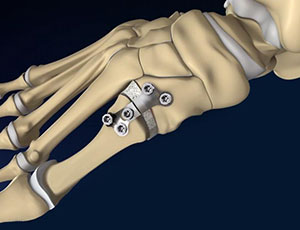
Correction combines procedures matched to your particular deformity. Bone cuts reposition the heel or the forefoot; fusions stabilize joints that are arthritic or too unstable to hold a correction; tendon transfers rebalance the pull across the foot; and lengthening a tight calf reduces the strain that drives many deformities in the first place.
The specific combination is decided from your examination and imaging, and confirmed during surgery.
Recovery
Because most corrections rely on bone healing, recovery is governed by that timeline rather than by how you feel. Expect a period with no weight on the foot, in a splint and then a boot, followed by a graded return to weight bearing and physical therapy. Swelling after realignment surgery is persistent and improves over months. You will receive a written protocol for your specific procedure.
Risks Associated with the Procedure
As with any surgery, deformity correction comes with risks such as:
- Infection, swelling or stiffness
- Wound hematoma (bleeding)
- Problems of healing
- Blood clots in the leg
- Nerve injury with numbness
- Restriction of joint movement
- Shortened foot
- Development of arthritis later in life
- Additional surgery due to non- or malunion