

Foot and Ankle Arthritis
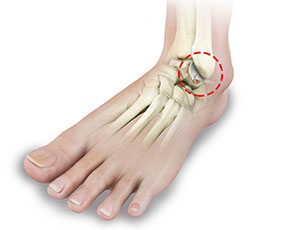
What arthritis in the foot and ankle involves
Arthritis means the cartilage lining a joint has worn away, so that bone begins to contact bone. In the foot and ankle it produces pain that is worse with activity and after standing, stiffness that is most noticeable first thing in the morning, swelling that comes and goes, and often a joint that aches in cold or damp weather.
The foot and ankle contain more than thirty joints, and arthritis behaves differently depending on which one is affected. Ankle arthritis limits the up-and-down motion needed to walk on slopes and stairs. Arthritis in the hindfoot joints below the ankle makes uneven ground difficult. Arthritis at the base of the big toe limits push-off and makes shoes with any heel uncomfortable.
Why it develops
Unlike the hip and knee, arthritis in the ankle is most often the consequence of an injury rather than of age alone. A fracture that healed with the joint slightly out of position, or years of instability after repeated sprains, loads the cartilage abnormally and wears it out decades later. Inflammatory arthritis such as rheumatoid disease, and long-standing deformity such as a collapsed arch, are the other common routes.
Diagnosis
Weightbearing X-rays are the foundation, because a joint looks quite different loaded than it does lying down. They show how much cartilage space remains, how the foot is aligned, and which joints are involved. CT or MRI is added when the picture is unclear or when planning surgery.
Treatment
Most arthritis is managed without surgery, and often well. Anti-inflammatory medication, activity modification, a stiff-soled or rocker-bottom shoe, custom orthotics, bracing, and physical therapy all reduce the load passing through the worn joint. Cortisone injections can settle a painful flare and also help confirm which joint is the source of pain.
Surgery is considered when those measures no longer control the pain and the arthritis is limiting your life. Options depend on the joint and the stage: arthroscopic removal of bone spurs and inflamed lining for early disease, ankle replacement or ankle fusion for end-stage ankle arthritis, and fusion of individual joints elsewhere in the foot.